The short answer
CDC’s adult guidelines call for muscle-strengthening activity on at least 2 days a week, working all the major muscle groups. That sits alongside aerobic activity, not in place of it.
Start with movements you can control, leave time between sessions to recover, and talk with a clinician first if you have not been active or are not sure what is safe.
The guideline: two days, all major muscle groups
The recommendation is muscle-strengthening activity on at least 2 days a week that works legs, hips, back, abdomen, chest, shoulders, and arms.
It applies to adults, not only people who think of themselves as athletes.
Why it matters around fifty
The point is not to rebuild a 22-year-old body. It is to keep the muscle you use to stand up, carry groceries, climb stairs, and stay independent later.

Those years are not far from fifty. Starting before a guideline asks for extra balance work is not vanity. It is looking ahead.
What counts as muscle-strengthening
CDC describes muscle-strengthening as activities that work all the major muscle groups.

| What counts | Example |
|---|---|
| Lifting weights | Free weights or machines |
| Resistance bands | Band rows or presses |
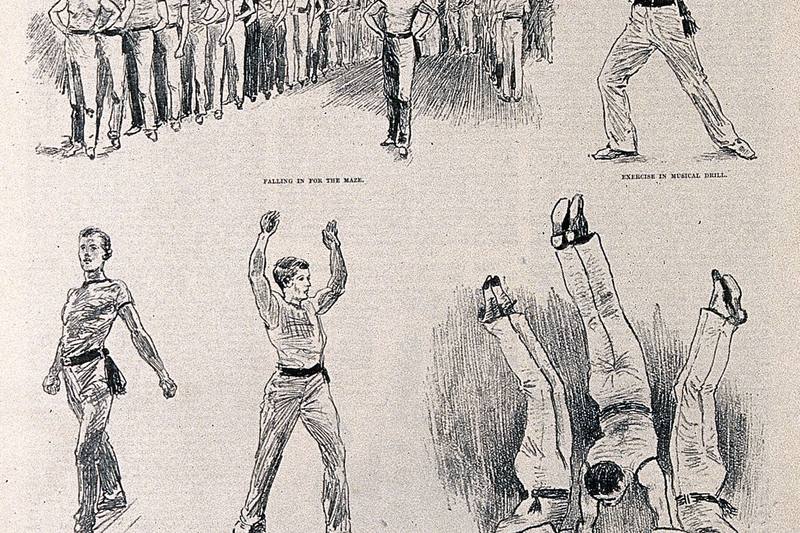
| Body-weight exercises | Push-ups, pull-ups, sit-ups |
| Climbing | Stairs or hills |
| Carrying | Heavy loads |
| Yard work | Heavy gardening |
You do not need a gym to meet the spirit of the guideline.
How hard, how many
CDC says to do muscle-strengthening to the point where it is hard to do another repetition without help.
Read those numbers as a public guideline, not a personal program designed for your joints, blood pressure, or surgical history.
If you have not been active, have a chronic condition, or are not sure what is safe, talk with a clinician before you turn a webpage into a workout.
Aerobic work does not replace this
The same guidelines call for at least 150 minutes a week of moderate-intensity aerobic activity, or 75 minutes of vigorous activity, or an equivalent mix.
A long walk is still a long walk. Two days that challenge the legs, hips, back, abdomen, chest, shoulders, and arms fill a different need.
Think of strength work as practice for tasks life still asks of you: the grocery bag, the suitcase, the grandchild you want to lift safely.
Starting without making it a personality test
Begin with movements you can control. Leave room between sessions so your muscles can recover.
If something causes sharp pain, dizziness, chest pain, or a sense that something is wrong, stop and get medical advice rather than pushing through as proof of character.
People 65 and older are also advised to include activities that improve balance.
If you are younger, you are not automatically in that extra category. Balance is still worth practicing, especially if you already feel unsteady. That is preparation, not a claim that every 50-year-old faces the same fall risk as someone 65 or older.
A first step you can take this week
If your weekly movement is only walking, keep walking and add two short sessions that ask more of your muscles.
If you already lift and never walk, do not treat the gym as a complete substitute for aerobic work. The guideline is both/and: heart and lungs, and muscle.
This article is educational and does not diagnose any condition or recommend starting or stopping any medicine. Personal decisions belong with you and a qualified clinician.